The five high-value applications driving commercial success in the UK
The most successful drone operators treat their aircraft as just another tool in their contracting business. By training with us and joining the AutoSpray Pilot Network (ASPN), you gain access to the most profitable applications secured through our regulatory framework.
Here are the five highest-value commercial applications new ASPN pilots should be targeting.
Glasshouse Shading/Removal & Polly Tunnel Cleaning
Customer Pain Point:
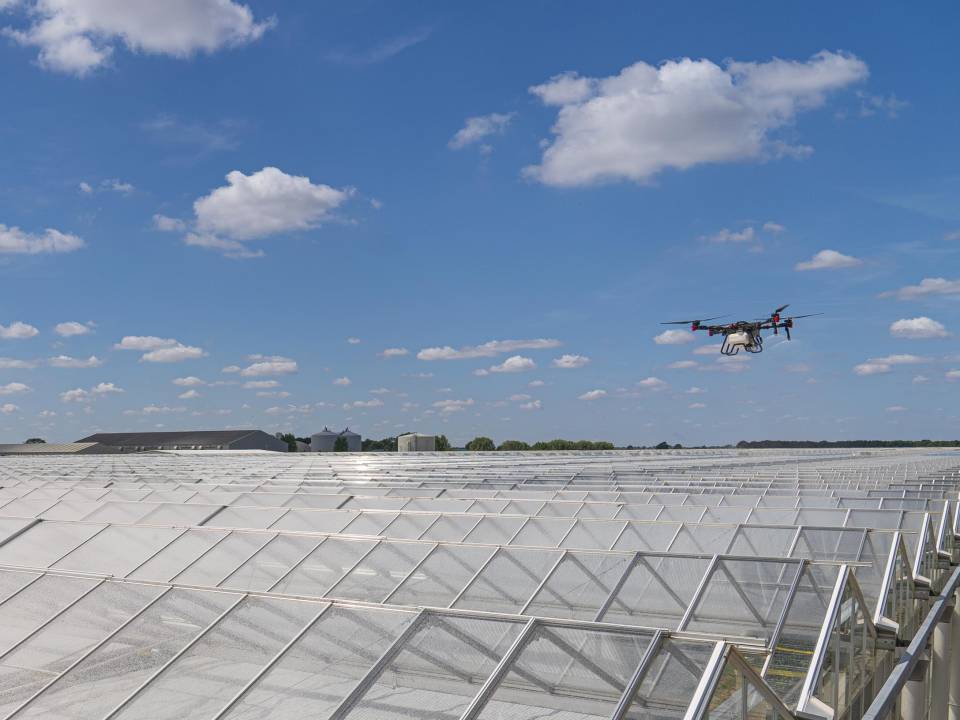
Traditional glasshouse shading is highly labour-intensive, inconsistent, and dangerous. Company Directors could even face prison time if someone is injured doing the job the old way. For polytunnels, growers currently have no solution other than costly, non-environmentally-friendly sheeting replacement every few years.
Solution:
Rapid, safe, uniform application without scaffolds or machinery access issues. Because drone application is so much quicker, work can be scheduled when it’s needed, not when contractors have availability. Drone cleaning enables annual maintenance for polytunnels, maximizing light transmission and growth potential – fundamentally changing the maintenance cycle for the industry.
Proof:
ASPN members have driven high profit margins from glasshouse work. One of our operators did £12K of greenhouse shading in one week. Our first ever ASPN members qualified in April 2023. Two years later, they turned over £850K with a very healthy net profit margin, all driven by greenhouse shading work. Polytunnel cleaning capabilities are being prepared for early 2026 launch with dedicated training and application protocols.
Fertiliser Applications
Customer Pain Point:
Farm machines must follow tramlines and ground machinery cannot access wet or early-season fields without causing soil compaction.
Solution:
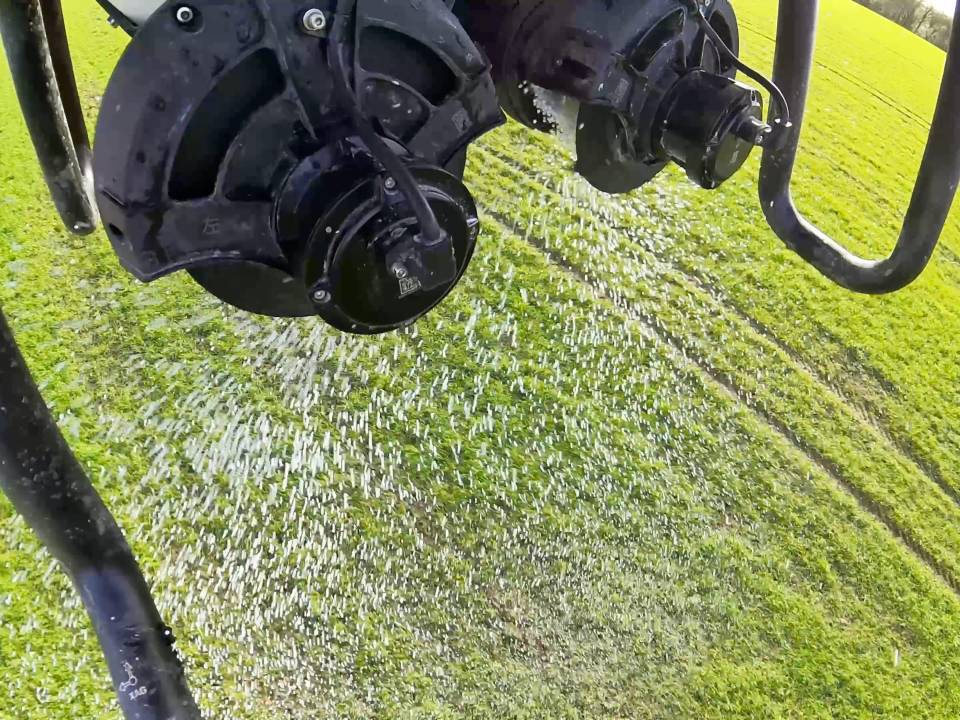
Drone application means zero ground pressure, eliminating soil damage and allowing access at crucial early growth stages. It provides timely nutrient delivery exactly where it’s needed using prescription maps and variable rate technology. At 50L/Ha application rates, XAG operators can achieve a minimum of 6Ha/Hr throughput, translating to £360/hour based on mid-range pricing of £40-75 /Ha depending on field size.
Proof:
Liquid nitrogen application onto late-stage maize, directed by an agronomist, delivered an 8–10% boost to yield, with application costs approximating only 3% of that increase. This demonstrates that motivated operators who engage the right agronomists can achieve excellent profitability while delivering measurable value to their clients.
Cover Crop Seeding
Customer Pain Point:
Time-critical operations are often missed due to weather or machinery availability. Contractors often skip areas because the season is too short.
Solution:
Rapid deployment and consistent broadcasting allow ASPN operators to access fields 3-4 weeks before harvest. This flexibility captures crucial, high-value weather windows that significantly accelerate establishment, when early access counts most (a week of sun in August is worth 2 weeks in September).
Proof:
That 3-4 week early access allows some of our operators to work with customers who previously skipped cover crops altogether due to short seasons. It’s a popular service that directly improves soil health and carbon-capture outcomes.
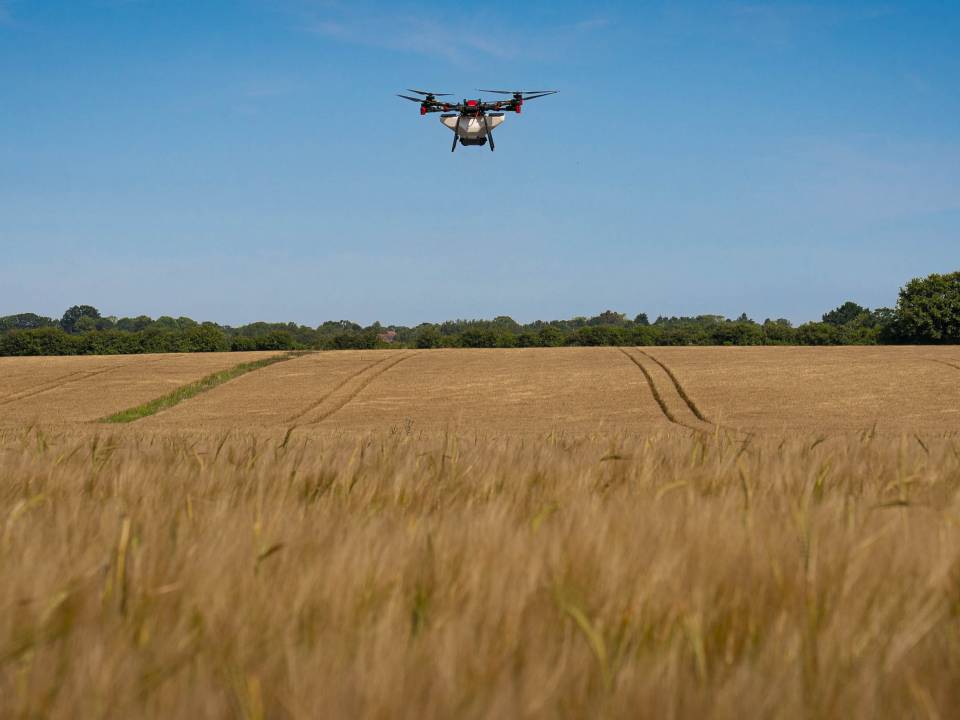
It’s also ideally suited to drone application with typical application rates of 8-15Kg/Ha. This means that an XAG P100 Pro can cover over 15Ha/hr.
Direct Seeding Woodland Creation
Customer Pain Point:
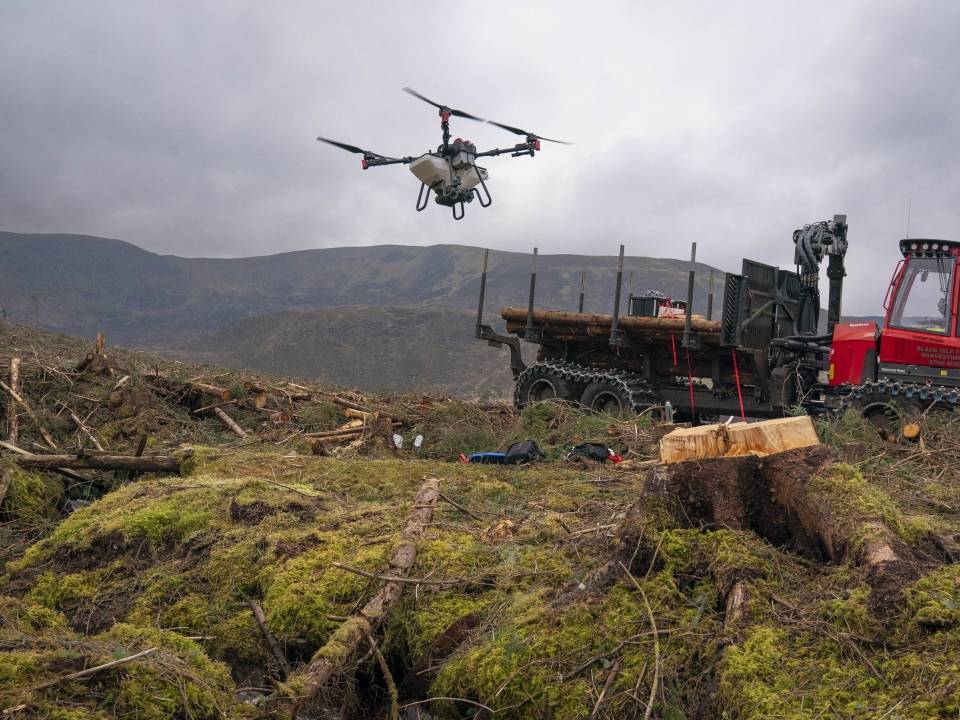
Remote, steep, or inaccessible ground makes traditional planting uneconomical and very dangerous. All forestry companies have major Health & Safety pressures they must resolve.
Solution:
Drone deployment delivers high-precision seed delivery at scale, drastically reducing establishment costs. Critically, the drone enables landscape-level reforestation safely, solving the severe H&S risks associated with remote and steep ground work.
Proof:
This is an area AutoSpray has been actively pioneering. We have already completed important work for major clients, including Scottish Water and the Woodland Trust. As results from these early projects gain traction, we expect the forestry market to snowball. This is a huge, long-term growth area that is not waiting for any kind of regulatory change. To enable this market to grow, we introduced our “Forestry Works Manager” training course in February 2026.
Peatland Restoration
Customer Pain Point:
Peatlands are critical carbon stores but are often inaccessible and extremely fragile. Traditional on-foot surveys and manual restoration work are slow, physically demanding, and risk damaging the delicate Sphagnum mosses the project is trying to save. Furthermore, conventional machinery is often too heavy for these waterlogged environments, leading to further ground compaction and carbon release.
Solution:
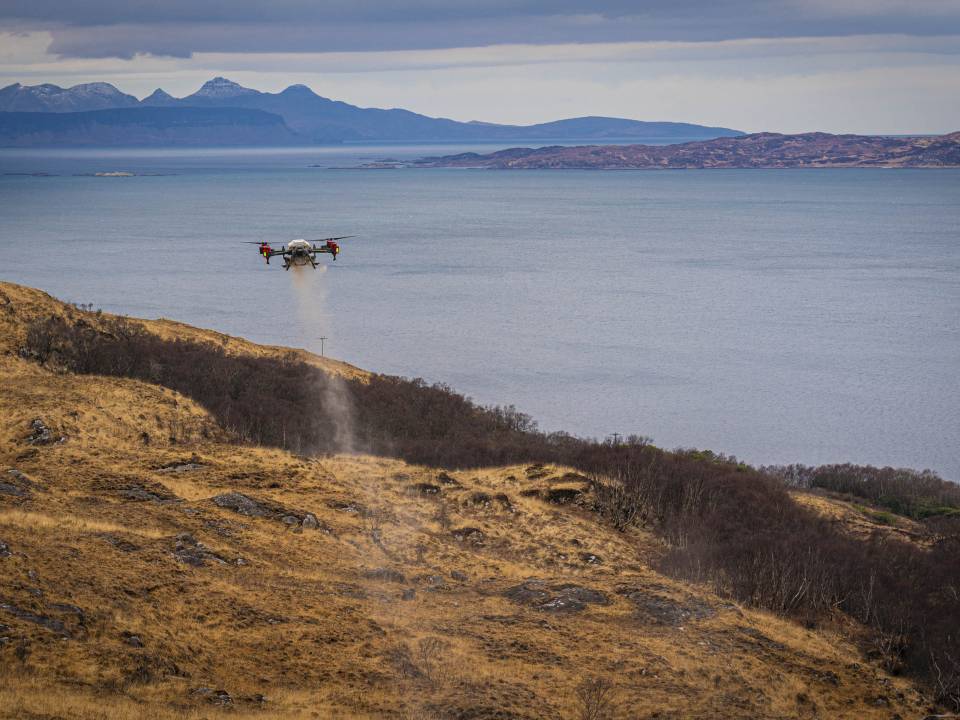
Drone deployment provides a zero-impact alternative for both mapping and restoration delivery. By using heavy-lift XAG platforms, ASPN pilots can broadcast Sphagnum fragments and specialist seeds over vast, boggy areas without ever setting foot on the ground. This accelerates the “rewetting” process, improves natural water levels, and creates a healthy, carbon-capturing habitat more efficiently than manual labor.
Proof:
This application is currently being proven through our own ‘Beyond Restoration’ project – a landmark collaboration with the National Trust, the Woodland Trust, and the North Pennines National Landscape. This trial, backed by the government’s Future Flight Challenge, uses XAG drones to establish a blueprint for future environmental recovery efforts across the UK. This technology is a vital part of the solution for meeting national peatland restoration targets by 2050.
Contact
Ready to take flight?